
Welcome To Coimbatore District

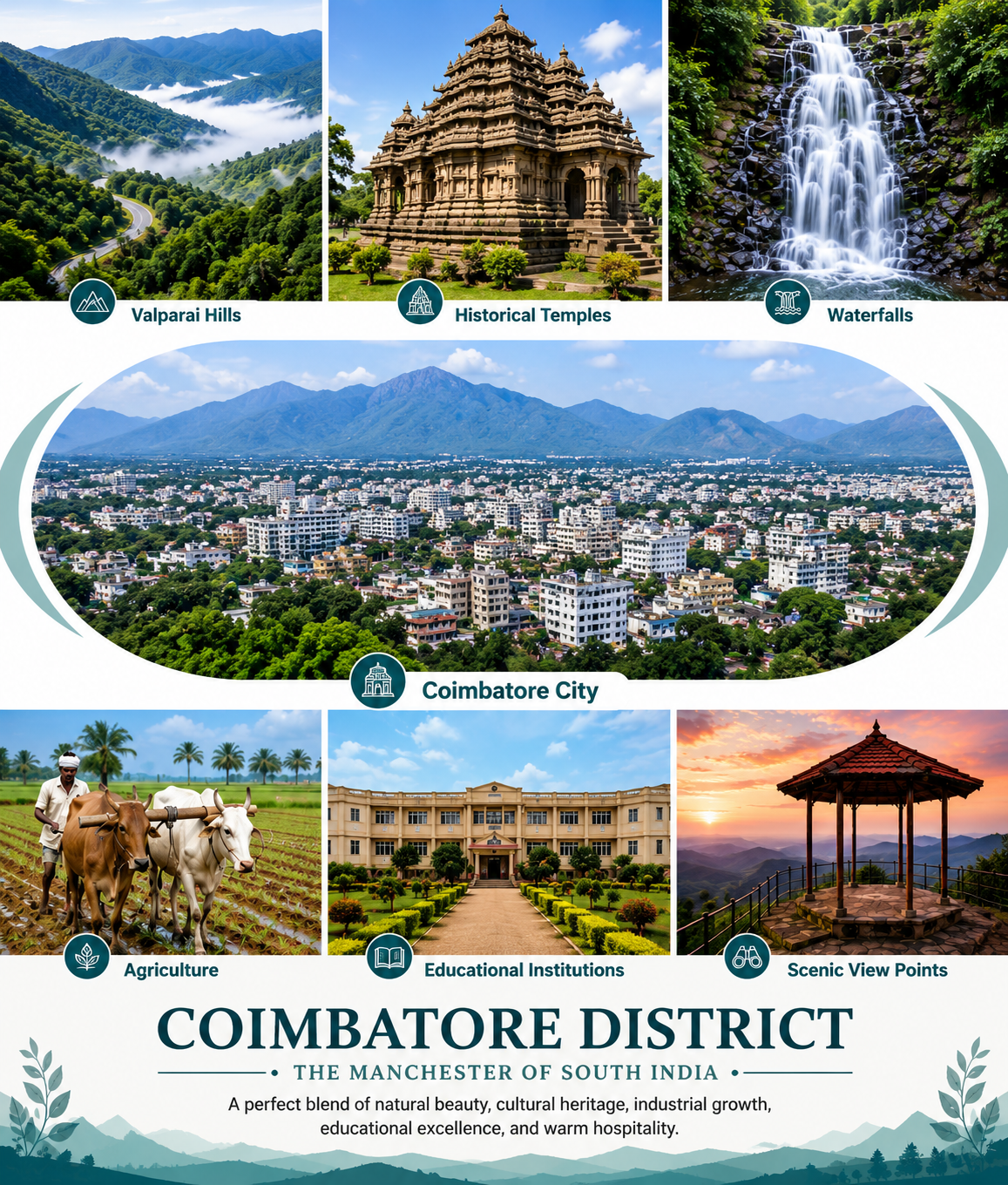
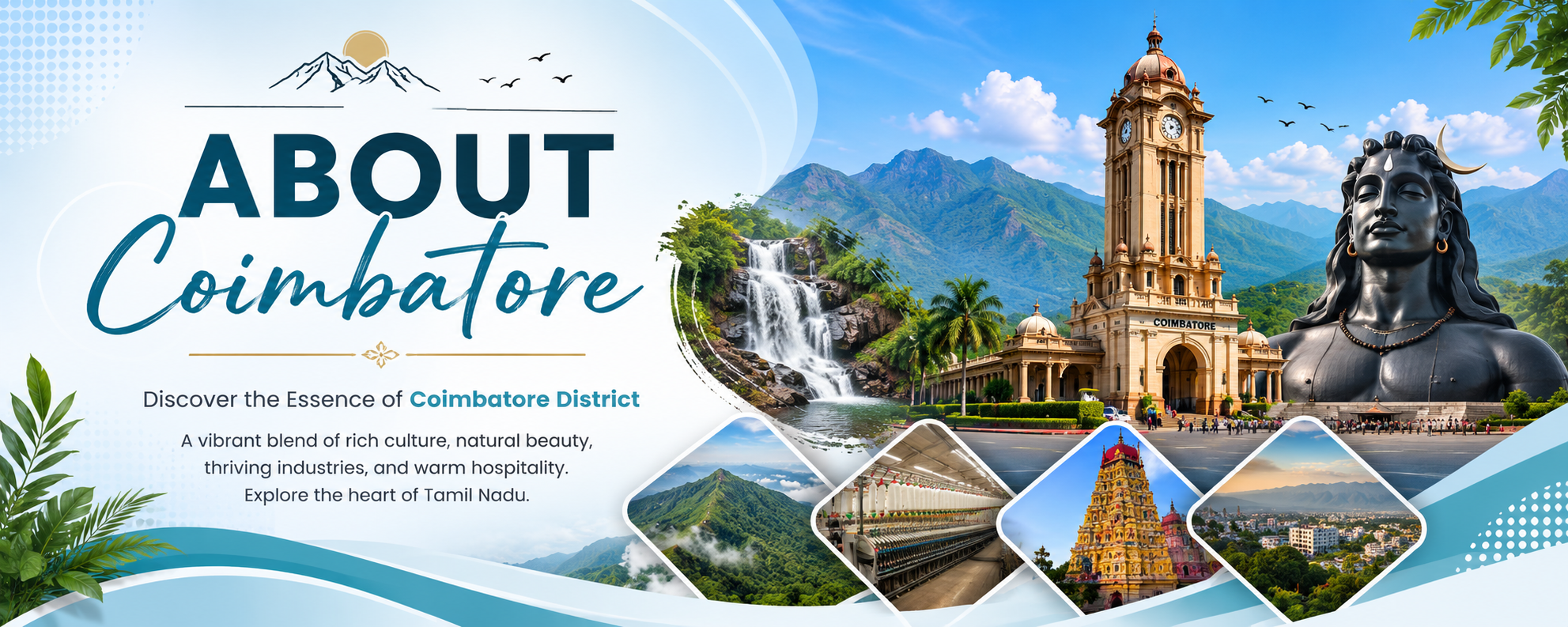
Nestled at the foothills of the Western Ghats, Coimbatore District is one of the most vibrant and rapidly growing regions of Tamil Nadu, known for its unique blend of natural beauty, rich cultural heritage, and industrial excellence. Popularly referred to as the “Manchester of South India,” Coimbatore attracts visitors and businesses alike with its pleasant climate, scenic landscapes, and strong economic foundation. The district plays a vital role in textiles, manufacturing, education, and tourism, contributing significantly to the state’s development.
Coimbatore District has a long-standing history and has evolved into a major urban and industrial hub over the years. The city of Coimbatore serves as the district headquarters and is well-connected to major cities like Chennai, Bengaluru, and Kochi through road, rail, and air networks. The district comprises several towns and rural areas, each reflecting the rich traditions, culture, and lifestyle of Tamil Nadu.
One of the district’s major attractions is the majestic Velliangiri Hills, often referred to as the “Kailash of the South,” along with popular destinations like Siruvani Waterfalls, Marudamalai Temple, and the Isha Yoga Center. These locations offer a perfect blend of spirituality, nature, and adventure, making Coimbatore a favorite destination for tourists and pilgrims.
Why Connect With Us
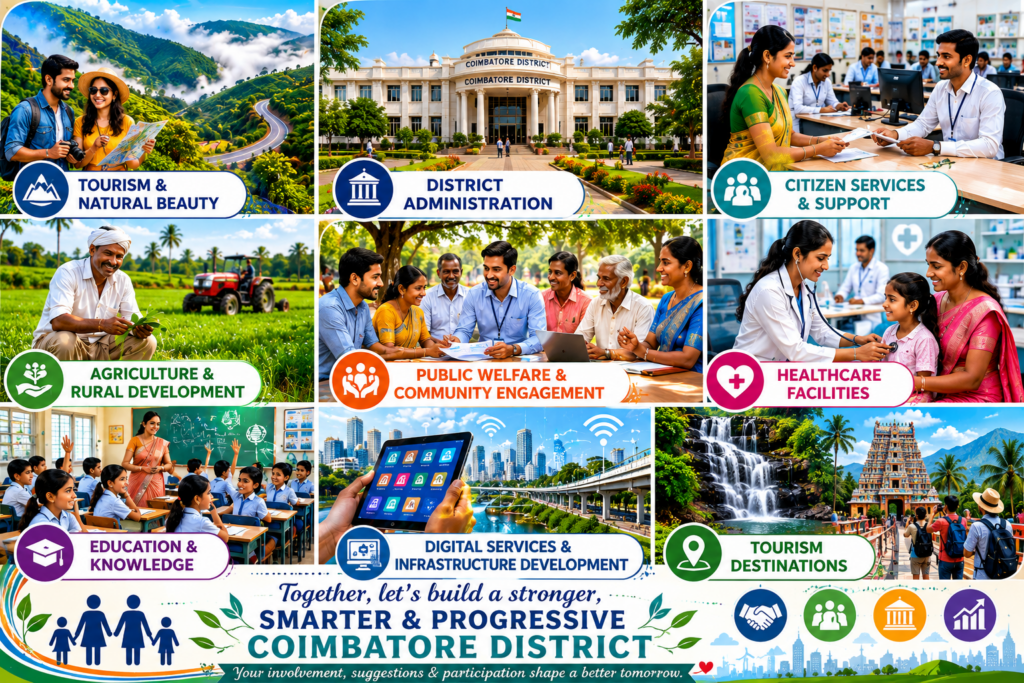
Connecting with Coimbatore District Administration provides citizens, visitors, and stakeholders with easy access to essential public services, information, and support. Whether you are looking for details about government schemes, public welfare programs, district offices, educational institutions, healthcare facilities, tourism destinations, or ongoing development initiatives, our platform serves as a reliable and comprehensive source of information. We aim to keep residents informed about district activities, updates, and opportunities that contribute to overall growth and well-being.
Our objective is to strengthen communication between the administration and the public by promoting transparency, accessibility, and engagement. By connecting with us, you can stay updated with important announcements, access various services efficiently, and actively participate in the development and progress of Coimbatore District.
Geography & Location – coimbatore District
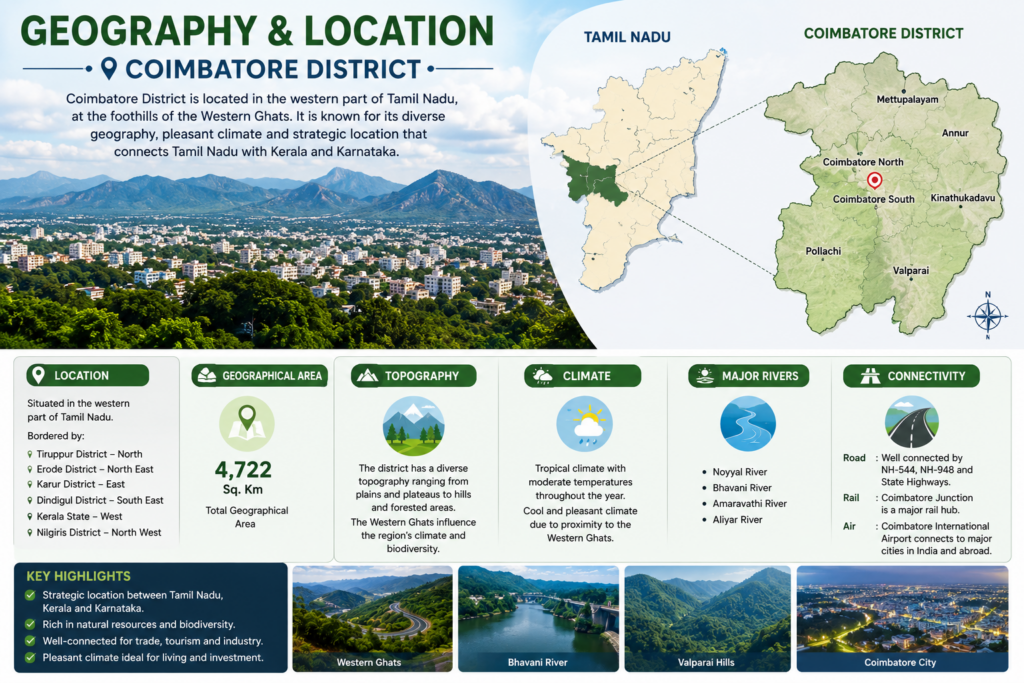
This schematic map of the region highlights the boundary and location of Coimbatore District, shaded prominently, with its district headquarters located in Coimbatore city. The map clearly represents the district’s strategic position in the western part of Tamil Nadu, near the borders of Kerala and close to Karnataka, making it an important gateway for trade, travel, and connectivity.
Key geographical points labeled on the map include:
- Coimbatore District (highlighted area with headquarters in Coimbatore city)
- Adjacent districts such as Tiruppur, Erode, Nilgiris, and Dindigul
- Neighboring state of Kerala to the west, enhancing interstate connectivity
Culture, Faith & Festivity of Coimbatore District
Coimbatore District is a culturally vibrant region of Tamil Nadu where tradition, faith, and modern lifestyle exist in perfect harmony. The district reflects a rich heritage shaped by ancient temples, spiritual centers, and diverse communities, where cultural values and devotion are an integral part of everyday life. Religious places such as Marudamalai Temple and other sacred sites play a significant role in bringing people together and strengthening social bonds.
Festivals in Coimbatore are celebrated with great enthusiasm and devotion. Major occasions such as Pongal, Tamil New Year, Vinayaka Chaturthi, Deepavali, and Thaipusam are observed with traditional rituals, colorful decorations, cultural events, and joyful family gatherings. During these festivals, the entire district comes alive with lights, music, and celebrations, reflecting the unity and spirit of the people.

Agriculture in Coimbatore
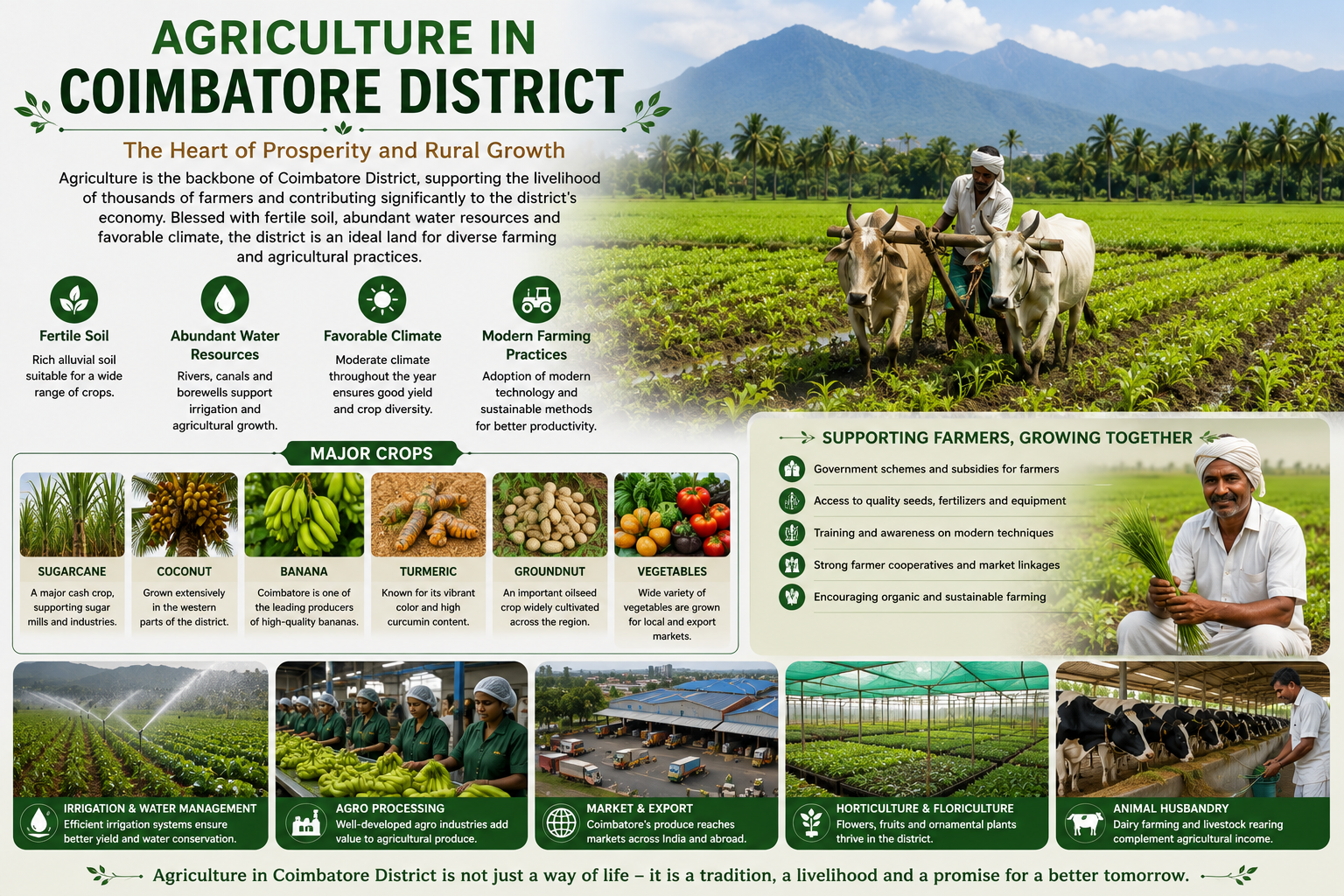
Agriculture plays a significant role in the development of Coimbatore District and remains an important source of livelihood for many people, especially in rural areas. The district supports the cultivation of a wide variety of crops including coconut, sugarcane, banana, turmeric, maize, and vegetables, contributing to both local consumption and regional markets.
Coimbatore’s agricultural landscape reflects a perfect balance between traditional farming practices and modern techniques. With the support of irrigation systems such as canals, borewells, and drip irrigation, farmers are able to improve productivity and manage water resources efficiently. The district’s favorable climate and fertile soil further support diverse agricultural activities.
Coimbatore District Over View
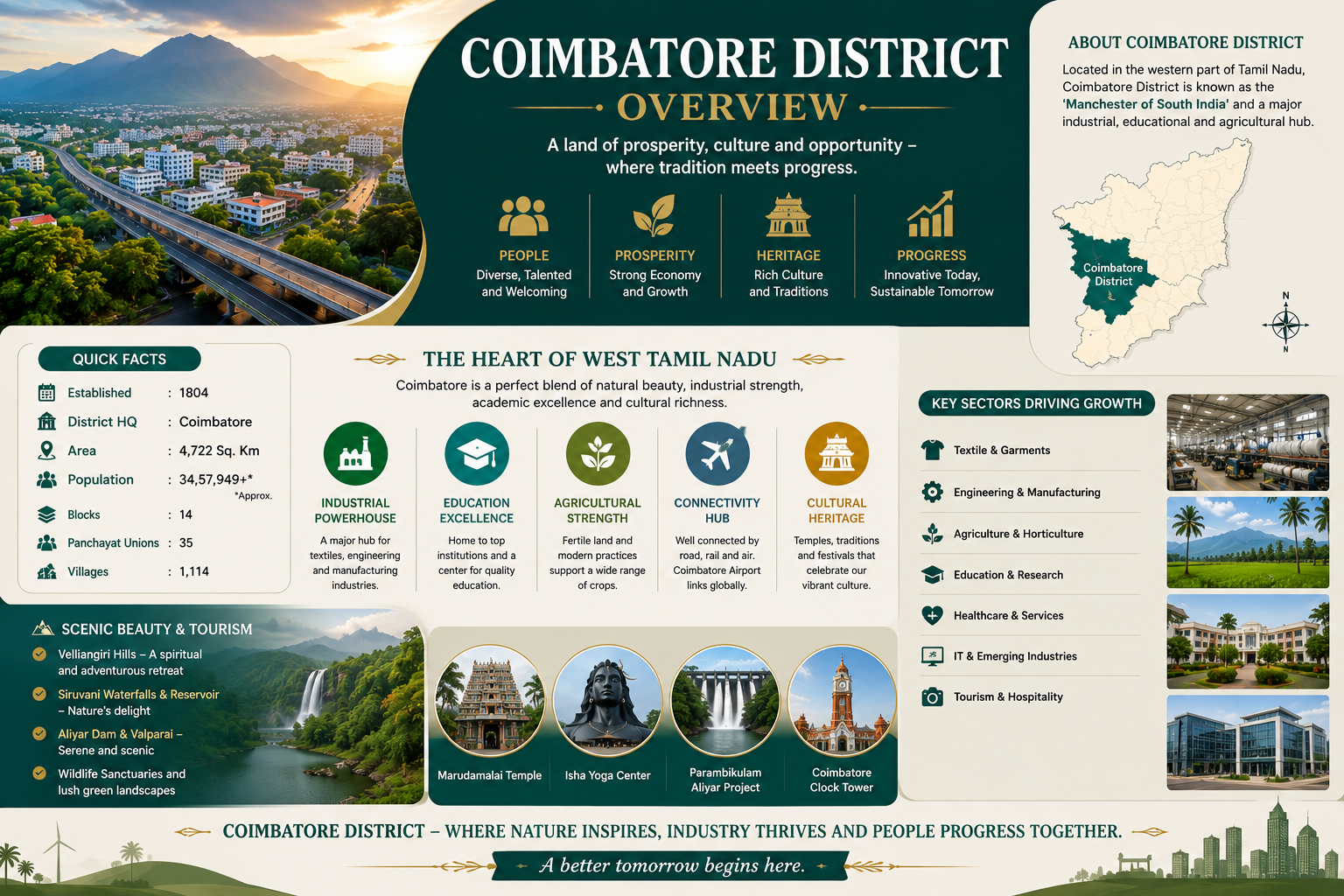
Coimbatore District is one of the most prominent districts in the state of Tamil Nadu, known for its industrial strength, scenic landscapes, and rich cultural heritage. Popularly referred to as the “Manchester of South India,” the district plays a vital role in the state’s economy, particularly in textiles, manufacturing, and education. Coimbatore city serves as the district headquarters and acts as a major administrative, commercial, and industrial center in the region. Located in the western part of Tamil Nadu, the district shares its boundaries with Tiruppur, Erode, Nilgiris, and Dindigul districts, as well as the neighboring state of Kerala.
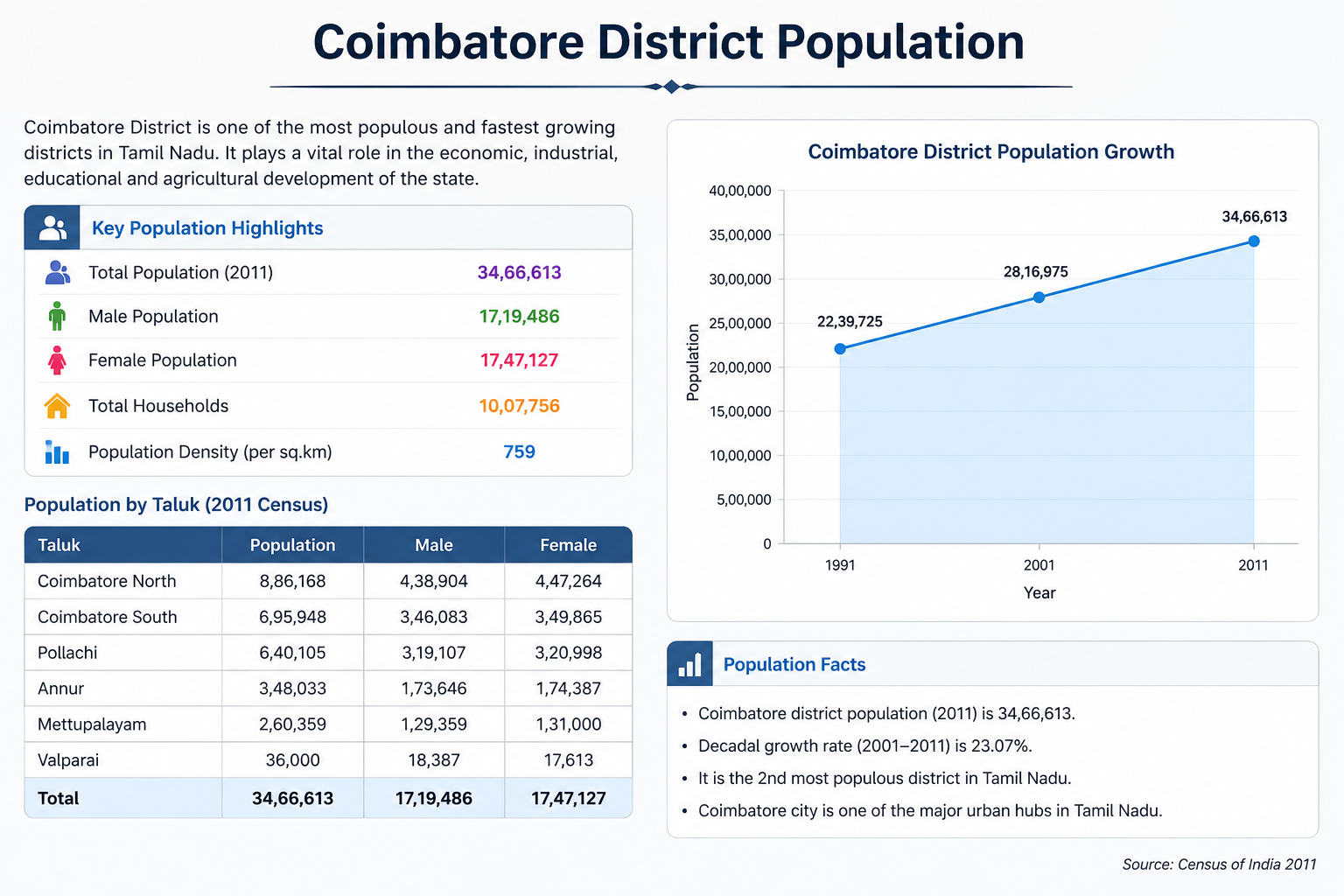
Covering an area of approximately 4,723 square kilometers, Coimbatore District features a diverse geographical landscape that includes fertile plains, rivers, agricultural lands, and the majestic Western Ghats. The district has a population of over 34 lakh people, with Tamil being the predominant language spoken by the residents. The region enjoys a moderate climate throughout the year, supported by its proximity to the Western Ghats, which contributes to its pleasant weather and natural beauty. Agriculture, along with industry, plays an important role in supporting the livelihoods of the people.
Administratively, Coimbatore District is well-organized into several taluks and blocks to ensure effective governance and service delivery. Major taluks include Coimbatore North, Coimbatore South, Pollachi, Mettupalayam, Sulur, and Valparai. These regions contribute significantly to the district’s economic activities, including agriculture, industry, education, and tourism. The district has a strong infrastructure network that supports both urban and rural development.
Coimbatore is widely recognized for its natural attractions and ecological significance. The district is home to the Velliangiri Hills, part of the Western Ghats, often referred to as the “Kailash of the South.” Other notable attractions include Siruvani Waterfalls, known for its pure and sweet water, and Valparai, a scenic hill station surrounded by tea plantations. Religious landmarks such as Marudamalai Temple and the globally renowned Isha Yoga Center attract pilgrims and tourists from across the country. These destinations make Coimbatore a major hub for tourism and eco-tourism in Tamil Nadu.
Agriculture and industry together form the backbone of Coimbatore’s economy. The district supports the cultivation of crops such as coconut, banana, sugarcane, turmeric, maize, and vegetables. At the same time, it has a strong industrial base with numerous textile mills, engineering industries, and IT parks. This combination of traditional and modern economic activities has helped Coimbatore emerge as a leading economic center in South India.
Coimbatore District enjoys excellent connectivity through road, rail, and air networks. National Highways and State Highways link the district to major cities like Chennai, Bengaluru, and Kochi. The Coimbatore International Airport connects the region to various domestic and international destinations, while a well-developed railway network facilitates easy transportation of passengers and goods. The presence of reputed educational institutions and advanced healthcare facilities further enhances the district’s importance.
Today, Coimbatore stands as a district that successfully blends tradition with modern development. Its strong administrative framework, industrial growth, agricultural strength, tourist attractions, and strategic location contribute significantly to the overall progress of Tamil Nadu. With its dynamic economy, cultural richness, and natural beauty, Coimbatore District continues to grow as a symbol of innovation, sustainability, and opportunity in South India.
Mandals in Coimbatore District
The Coimbatore District Taluk Map provides a detailed view of the district’s administrative divisions and geographic location within Tamil Nadu. The map highlights various taluks and their headquarters, helping to understand the district’s administrative structure and regional connectivity.
Coimbatore District is strategically located in the western part of Tamil Nadu. It is bordered by the Nilgiris District to the north, Erode District to the northeast, Tiruppur District to the east, Dindigul District to the south, and the state of Kerala to the west. This location makes the district an important gateway connecting Tamil Nadu with Kerala and other neighboring regions.
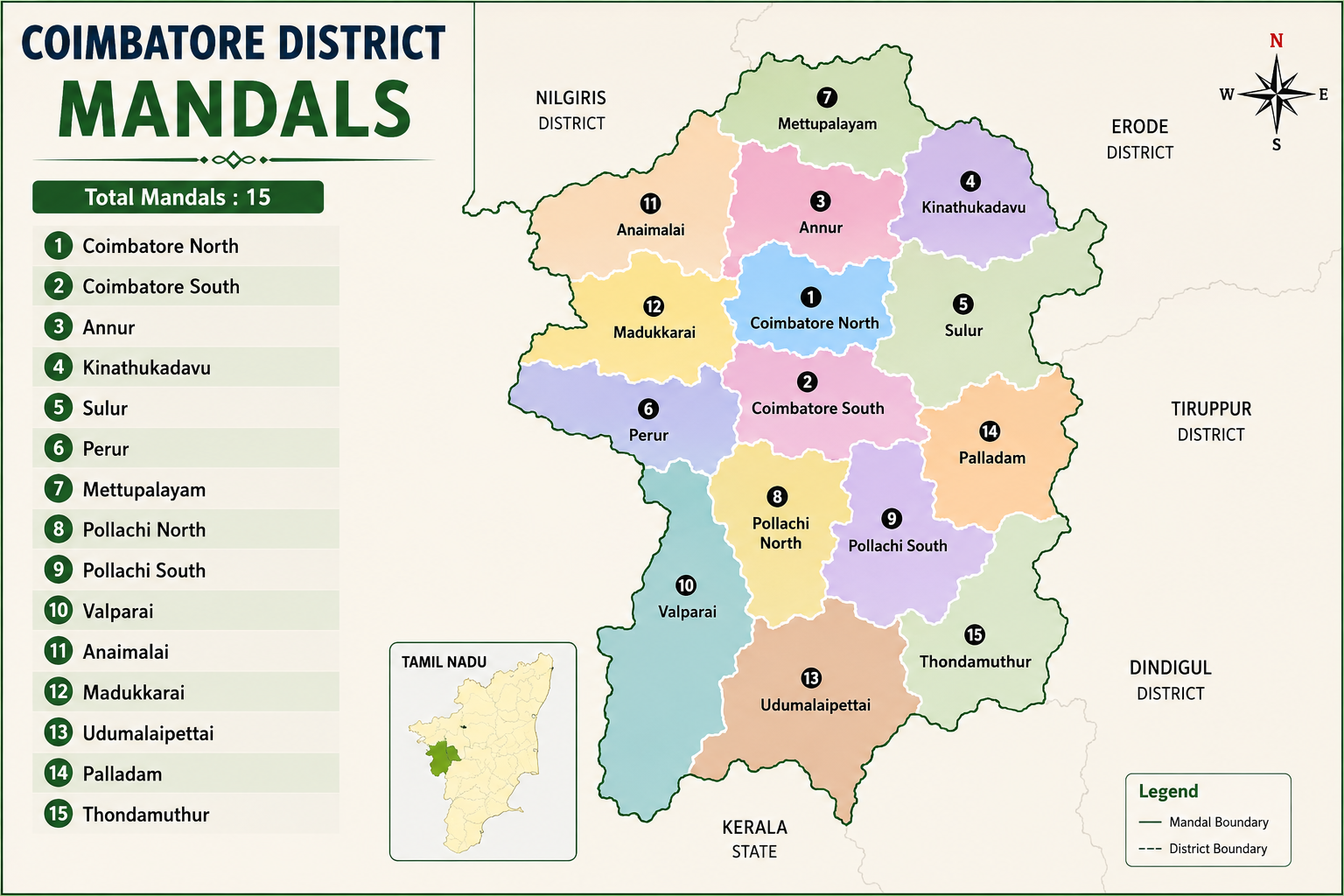
Coimbatore District Population and Chart image